
This is the new reality of work in 2026, and most organisations are dangerously unprepared.
The Quiet Crisis of Shadow AI
Generative AI tools have spread through workplaces faster than any technology in recent memory. ChatGPT alone reached 900 million weekly active users by February 2026, and that number reflects only one tool among dozens employees now use daily, often without their employer's knowledge or approval.
This phenomenon, sometimes called "shadow AI," mirrors the older problem of shadow IT. The motivation is usually innocent: people want to work faster, produce better output, or simply experiment. But when an employee pastes a spreadsheet of customers, a confidential contract, or internal financial data into a public AI model, that information may be logged, retained, used to train future models, or exposed through the provider's own breaches.
The organisation has effectively transferred personal data to a third party, often outside India, with no consent, no contract, and no record. That is precisely the kind of disclosure the DPDP Act was written to punish.

What the DPDP Act Actually Demands
India's Digital Personal Data Protection Act, 2023, moved from paper to practice in November 2025 when the DPDP Rules were notified (G.S.R. 846(E) on 13 November 2025). The framework creates India's first comprehensive rules governing the collection, processing, storage, and transfer of digital personal data, with full compliance required by 13 May 2027.
Organisations handling personal data, called data fiduciaries under the Act, must obtain explicit consent before processing data, use it only for declared purposes, implement robust security safeguards, and report breaches promptly. The Data Protection Board of India operates as a fully digital institution, dramatically lowering the bar for any aggrieved customer, employee, or competitor to file a complaint.
The penalties are not theoretical. The Schedule to the DPDP Act sets out the following maximum amounts:
| Violation | Maximum Penalty |
|---|---|
| Failure to implement reasonable security safeguards | ₹250 crore |
| Failure to notify the Board and/or affected individuals of a personal data breach | ₹200 crore |
| Breaches relating to children's personal data | ₹200 crore |
| Breach of additional obligations of Significant Data Fiduciaries | ₹150 crore |
| Breach of any other provision (including consent violations) | ₹50 crore |
For context, the average data breach already costs Indian businesses tens of crores according to IBM's annual Cost of a Data Breach reports. A DPDP penalty of up to ₹250 crore now sits on top of that.
Where AI and the DPDP Act Collide
The intersection is sharper than most leaders realise. Consider what actually happens when an employee uses a consumer AI tool with workplace data:
- The data leaves the organisation's controlled environment and is processed by a third party, frequently on servers outside India.
- The original individual whose data is involved, a customer, a patient, a job applicant, never consented to this specific processing.
- The organisation cannot demonstrate the "reasonable security safeguards" the Act requires.
- If the AI provider suffers a breach, or if the data surfaces in a future model's output, the organisation has no visibility and no ability to notify affected individuals within the required window.
Every one of these is a separate compliance failure. The Data Protection Board, when calculating penalties, weighs the nature, gravity, and duration of the breach, the type and sensitivity of data affected, whether the breach was repetitive, any gain derived, and the effectiveness of mitigation actions. An organisation that cannot even produce an AI usage policy will struggle to argue it took mitigation seriously.
"We didn't know our employees were doing that" stopped being a defence the moment the Rules were notified.
Why "We'll Deal With It Later" Is the Wrong Answer
In 2026, regulators are no longer looking for intent; they are looking for evidence of execution. The DPDP framework makes senior leadership directly accountable for how personal data is handled, and privacy risk is increasingly treated like financial or operational risk.
The era of treating data protection as the legal team's problem, to be drafted into a privacy notice and forgotten, is ending. Boards and executives are now personally on the hook. "We didn't know our employees were doing that" stopped being a defence the moment the Rules were notified.
What an AI Policy Should Actually Cover
A workplace AI policy is not a one-page memo telling people to "be careful." To meaningfully reduce DPDP exposure, it should address at minimum:
- Permitted and prohibited tools: which AI systems are sanctioned for which categories of work. Enterprise versions of major AI tools usually offer data residency, no-training guarantees, and audit logs that consumer versions do not. The policy should name names.
- Data classification rules: clear, plain-language guidance on what data can never be entered into any AI system, what requires approval, and what is generally safe. Customer PII, health records, financial data, employee information, source code, and legal communications typically belong in the prohibited tier.
- Consent and purpose alignment: before personal data is processed by any AI tool, the organisation must be able to point to the consent that authorised that specific purpose.
- Vendor due diligence: AI providers handling personal data as data processors need contracts that reflect DPDP obligations, including breach notification, deletion rights, and limits on sub-processing.
- Monitoring and detection: browser-level controls, DLP tools, and audit logs to detect unauthorised AI use before it becomes a board-level incident.
- Training and accountability: policies that sit on intranets do nothing. Mandatory training, periodic refreshers, and clear consequences for violations create the cultural shift regulators expect to see.
- Incident response: the DPDP Rules establish a two-stage notification: immediate notification to the Board upon discovery, followed by notification to affected Data Principals within 72 hours. Both clocks start the moment the organisation becomes aware.
Solutions: Building Privacy-Safe AI at Work
Policy and governance set the rules. But employees will still want to use AI, and rightly so. The productivity gains are real. The answer is not to ban AI; it is to give employees safer alternatives that keep data inside the organisation's control. There is a spectrum of options, each with its own trade-offs.
Local and Self-Hosted AI Models
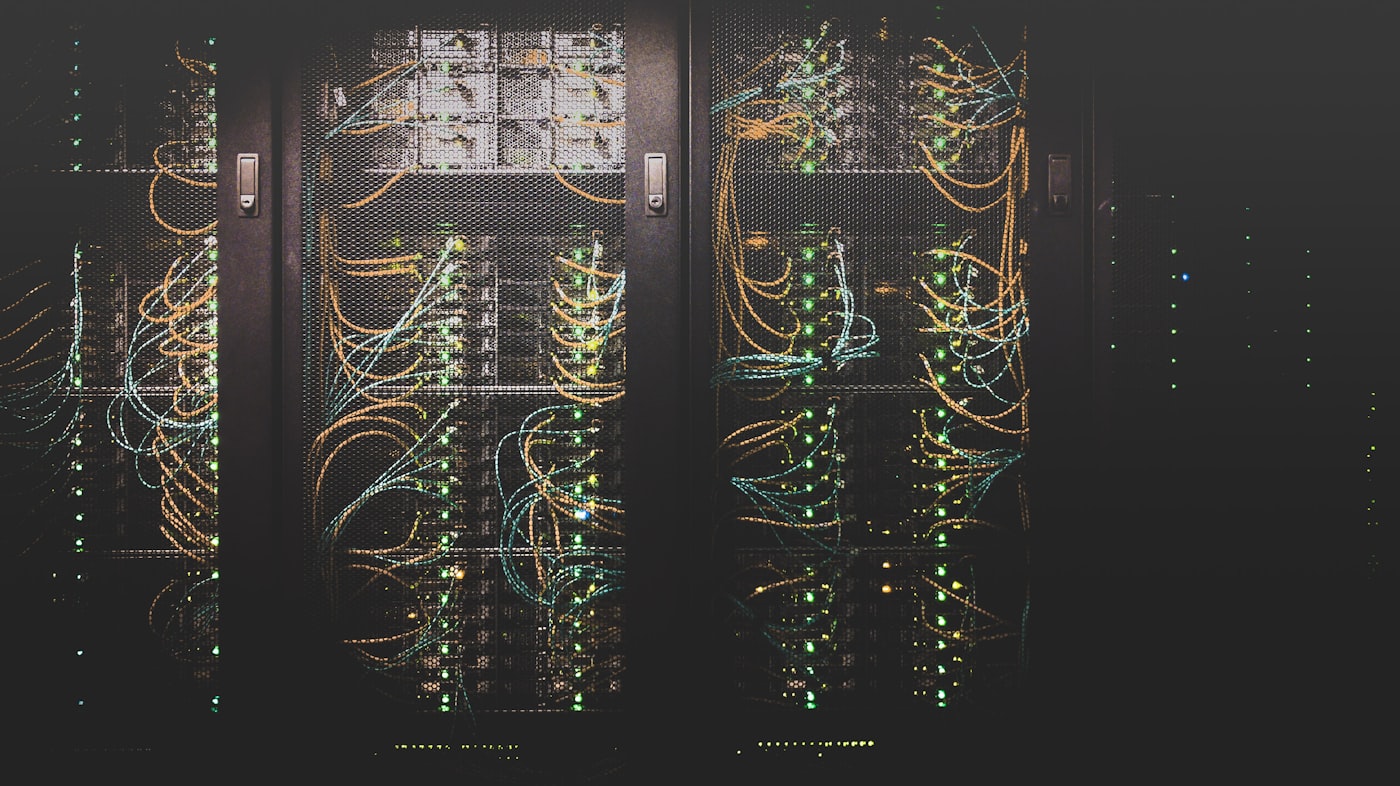
The strongest privacy posture available today. The model runs entirely on your organisation's own hardware, no prompt, no document, no customer record ever leaves your network. This collapses an entire category of compliance risk: there is no third-party transfer to consent to, no foreign jurisdiction to worry about, no vendor breach to notify on behalf of.
The ecosystem has matured rapidly. Open-weight models from Meta (Llama), Mistral, and Alibaba (Qwen) are freely downloadable from repositories like Hugging Face. Tools like Ollama (simplest entry point), LM Studio (non-technical users), vLLM (production scale), and llama.cpp (air-gapped environments) provide a complete local stack.
The honest trade-offs: upfront investment in hardware, engineering capacity to maintain the stack, and acceptance that open-weight models, while excellent, may trail the very latest frontier models in raw capability. For most workplace tasks (drafting, summarising, classifying, answering internal questions), this gap is increasingly negligible.
Enterprise Editions of Cloud AI
The major AI vendors all offer enterprise tiers that are materially different from their consumer products. Look specifically for: contractual commitments that your data will not be used to train models, data residency options (some vendors now offer India-based processing), encryption in transit and at rest, role-based access controls, comprehensive audit logs, and DPA terms that map cleanly onto DPDP obligations.
This route is faster to deploy than self-hosting and gives access to the most capable models, but it shifts your compliance posture from "data never leaves" to "data leaves under strict contractual control." The contract review is where the real work happens.
Private Cloud and Sovereign AI
A middle path: deploy open-weight models inside your own cloud tenancy on AWS, Azure, or a domestic provider with India data centres. You get the elasticity of cloud and the control of self-hosting, with the data never leaving an environment you legally control. This is increasingly the default pattern for regulated sectors like banking, insurance, and healthcare in India.
Retrieval-Augmented Generation (RAG) with Local Knowledge Bases
Many of the most useful workplace AI applications, answering questions about internal policies, searching contracts, summarising customer history, do not require sending sensitive data to a model at all. RAG architectures store your documents in a local vector database and retrieve only the relevant snippets at query time. Pair this with a local model and you have an internal knowledge assistant where data never leaves the building.
Data Minimisation and Redaction
Sometimes the right answer is to strip personal data before AI ever sees it. Automated redaction tools can remove names, account numbers, addresses, and other identifiers from a document before it goes anywhere near a model. The AI gets to do useful work; the personal data stays protected.
Choosing the Right Mix
Most mature organisations end up with a portfolio rather than a single solution. Highly sensitive workloads (legal, HR, financials, customer PII) run on local or sovereign-cloud models. General productivity tasks use enterprise-contracted cloud AI with strict data-handling rules. Public-facing or non-sensitive work can use a wider range of tools. The AI policy then becomes a routing decision: this kind of work goes to this kind of tool, and here is how we enforce that.
The cost of standing up a local AI capability is measured in lakhs to a few crores. The cost of a single major DPDP violation can be ₹250 crore. The risk-adjusted maths increasingly favours bringing AI in-house.
Governance Is the Multiplier
AI policy is a subset of AI governance, the broader discipline of deciding how an organisation will develop, procure, deploy, and oversee AI. Governance is where the policy gets teeth: a cross-functional committee, documented risk assessments, board reporting, alignment with frameworks like NIST's AI RMF or ISO/IEC 42001, and an honest inventory of where AI already touches the business.
Organisations that treat AI governance as a compliance burden will find themselves drafting policies in panic after a breach. Those that treat it as a capability, similar to financial controls or cybersecurity, will move faster than competitors because their employees know exactly what they can do, what they cannot, and who to ask when uncertain.
The Window Is Closing
The full compliance deadline is 13 May 2027. That sounds distant until you map it against the work involved: auditing current AI usage, classifying data, renegotiating vendor contracts, building training programmes, deploying monitoring tools, and getting leadership aligned.
Those that wait will discover that the cost of a single unauthorised paste into a chat window can be measured in crores, and that the Data Protection Board does not accept "we meant to get around to it" as a mitigating factor.
AI in the workplace is not going away. The question is whether your organisation governs it, or whether it governs you.

